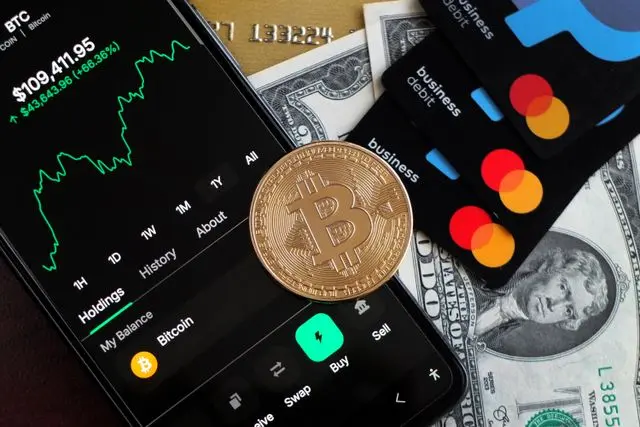


Depositing Crypto Proceeds in a Georgian Bank: Source of Funds and Pre-Clearance Explained
A scenario we see in our practice with some regularity: a client bought Bitcoin or Ethereum years ago, held through several market cycles, and now wants to convert part of it to fiat, to buy an apartment in Tbilisi, fund a company, or simply move savings somewhere less volatile. The sale itself is the easy part. The hard part comes when the money touches a Georgian bank account and the compliance department asks a question the client has never had to answer in writing before: where did this come from?
What happens next depends almost entirely on preparation. Clients who arrive at the bank with a documented history usually get their funds credited without drama. Clients who wire first and explain later often end up with a frozen transaction, a request for documents they no longer have, and in the worst cases, a closed account and a compliance flag that follows them to the next bank.
This article explains why Georgian banks treat crypto-derived funds with heightened scrutiny, what "source of funds" actually means in practice, and how a pre-clearance approach turns an adversarial process into a manageable one.
Why Georgian banks scrutinize crypto money
Georgian commercial banks are obligated entities under the Law of Georgia on Facilitating the Prevention of Money Laundering and the Financing of Terrorism. Before establishing a business relationship or executing a transaction, a bank must apply preventive measures, verify the client, assess risk, and report suspicious activity to the Financial Monitoring Service of Georgia. This is not bank policy dressed up as law; it is law that shapes bank policy.
Crypto sits in the high-risk category of that framework for reasons that are structural rather than ideological. A bank cannot see your counterparties on-chain, so the entire burden of proof shifts to you. The National Bank of Georgia has regulated virtual asset service providers since 2023, requires their registration, and has publicly warned citizens against keeping assets on unregistered platforms a signal to banks that the regulator expects caution. And Georgia's commitments under FATF and MONEYVAL evaluations feed directly into how conservative internal bank policies are.
The commercial logic that follows is blunt. For a bank, declining one client costs almost nothing; accepting one badly documented client can cost a regulatory finding. When a compliance officer looks at an unexplained six-figure inflow from a crypto exchange, refusal is the path of least resistance. Your job or your lawyer's is to remove the reasons for that refusal before the officer ever sees the transaction.
What "source of funds" means when the asset is crypto
Source of funds documentation is a reconstructed, evidenced chain: where the money that bought the asset came from, what happened to the asset while you held it, and how it became the fiat sum you now want to deposit.
For crypto holdings, that chain usually has three links.
The first is original capital. What did you buy the crypto with salary, business income, sale of property, inheritance? Employment contracts, tax filings, and bank statements from the purchase period carry the most weight here. This is the link people most often assume doesn't matter and banks most often ask about.
The second is holding history. Exchange account records, wallet addresses, transaction logs. If the assets came from mining, receipts for equipment and electricity costs become part of the file. Blockchain records are public, which cuts both ways: gaps and detours in your transaction history are visible, but so is a clean, traceable path.
The third is the conversion itself, where and how the crypto was, or will be, sold. Statements from a registered provider or a reputable exchange, trade confirmations, the rate at execution.
A pattern worth knowing: the older the asset and the more wallets it has passed through, the harder the reconstruction, and the more the outcome depends on how the file is assembled rather than on any single document.
Pre-clearance: fixing the order of operations
The most expensive mistake in this area is a sequencing mistake. Sell first, wire the proceeds, then start looking for paperwork when the bank freezes the credit. By that point the money is stuck, and you are answering questions from a position of suspicion. Dislodging a compliance officer's formed doubt is far harder than never triggering it.
Pre-clearance reverses the order: documentation and dialogue first, transaction second. In our practice the process runs in four stages.
It starts with a legal audit of the specific situation, acquisition history, what documents exist and what has been lost, the client's tax position, and the weak points a bank will probe. Every file has weak points; the question is whether you find them before the bank does.
Then the documentation package is built: a full chronology of the funds with supporting evidence, structured the way a bank's compliance department actually reads. Format matters more than clients expect. A risk officer is not going to admire your on-chain forensics, they want a coherent, evidenced narrative in plain financial language.
Third, the package goes to the bank before any money moves. This gives the bank time to review, ask follow-up questions, and reach an informed position while nothing is frozen and no clock is ticking.
Only then, with the bank's position established, does the conversion and transfer happen.
An honest caveat, because this field attracts overpromising: no lawyer can guarantee a bank's consent. Account decisions rest on each bank's internal risk policy, and banks retain broad discretion in choosing clients. What pre-clearance changes is your starting position, from "unexplained large inflow" to "transparent client who volunteered the full picture." In practice, that difference decides most cases.
Mistakes that end in rejection
Splitting a large sum into smaller transfers across accounts is the classic one. Clients do it hoping to stay under the radar; to a bank, structuring is a textbook red flag and converts a documentation problem into a suspicion problem.
Using unregistered exchangers is another. Funds converted through informal channels or peer-to-peer cash deals, bypassing NBG-registered providers, are close to impossible to evidence afterward, whatever their true origin.
Assuming a current exchange statement is enough is a quieter failure. The bank wants the whole chain, including what funded the purchase years ago, the very period for which people have discarded their records.
And ignoring tax exposure creates a trap of its own. Disposing of crypto may carry tax consequences, and the story you present to the bank must match your tax position. A source-of-funds file that contradicts your filings solves one problem by creating a worse one.
If the bank has already refused or frozen your funds
Do not immediately try the same funds at another bank with the same paperwork. Georgian banks assess risk in similar ways; a second refusal compounds the record rather than resetting it.
Ask the bank, in writing, what documentation is missing or what grounded the refusal. Banks do not always give detailed reasons for declining a relationship, but when a transaction is suspended they typically request specific documents, and that list is effectively your remediation plan.
Have the gaps analyzed before you respond. An incomplete or internally inconsistent reply usually does more damage than a slow one. In several matters we have handled, the client's own hurried first response was the hardest thing to repair.
Where a lawyer fits and a warning sign to watch for
Documenting crypto provenance sits at the intersection of law, finance, and blockchain mechanics. A lawyer's role is to read your history the way a bank will, assemble the file to the standard the AML legislation implies, and run the communication with the bank in the language its compliance function speaks.
One structural detail worth knowing: under Georgian AML law, advocates who assist clients with managing bank accounts or convertible virtual assets are themselves obligated entities. That is a protection for you. A lawyer operating properly cannot help disguise funds of unprovable origin, the work is limited to transparent documentation of legitimate assets. Anyone who promises otherwise is not offering a service; they are offering you a second legal problem. Treat guarantees of "clean" money as the red flag they are.
L&L Consulting advises on crypto-related legal matters in Georgia, from source of funds documentation and bank pre-clearance to VASP registration with the National Bank of Georgia. If you are planning a conversion or already facing a frozen transaction, contact us for an initial consultation.
Frequently asked questions
Is it legal to hold and sell cryptocurrency in Georgia?
Yes. Individuals may lawfully hold and dispose of virtual assets. Regulation targets virtual asset service providers, businesses that exchange, transfer, or custody assets for others, which must register with the National Bank of Georgia.
How long does pre-clearance take?
It depends on how complete your records are. A straightforward case, one exchange, a clean history, surviving documents, typically takes a few weeks; reconstructing an older or fragmented history takes longer. A realistic timeline emerges after the initial audit.
Is there a threshold amount below which banks don't ask questions?
No uniform threshold exists. Each bank applies its own risk policy and weighs your profile and transaction pattern, not just the sum. Crypto-linked inflows attract heightened attention regardless of size.
I bought crypto years ago and no longer have the records. Is my situation hopeless?
Often not. Blockchain records are public and transaction histories can be reconstructed; most exchanges retain historical data that can be requested; and original capital can frequently be evidenced indirectly. Whether the chain can be rebuilt is a case-by-case assessment.
Can I appeal a bank's refusal?
Banks retain considerable discretion in client selection, so formally contesting a refusal is rarely the productive route. Fixing the documentation gaps and re-presenting a complete file, or approaching another institution with pre-clearance done properly from the start, works far better in practice.
This article was prepared by L&L Consulting for general information and is not legal advice on any specific situation. Legislation and bank practice change; for advice tailored to your circumstances, consult an advocate.